Warning: Personal Reflection Combined With Essay on Nabokov’s Lolita
There was a time before Lolita, and then it all began after. The time in which it remained untouched cannot exist ever. To claim “it all began with Lolita” is not only bold but disastrous out of context.
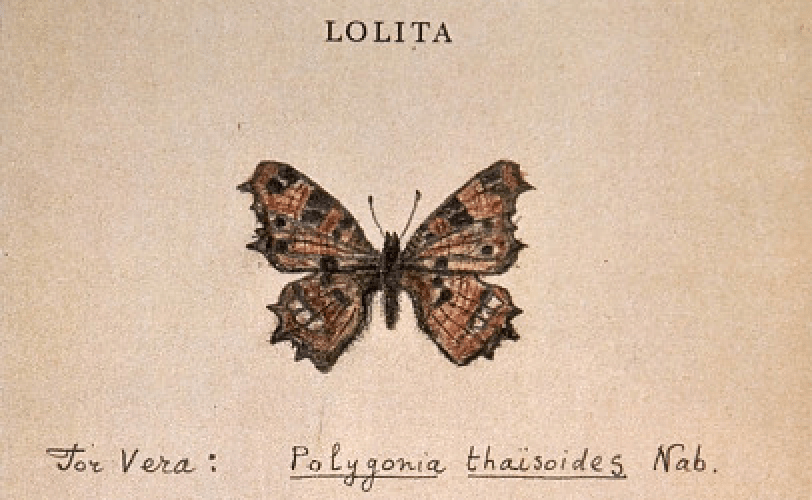
My Sin, My Soul
My attitude towards peophilia is not one of complete resentment, but rather pity. To me, pedophilia looks to be an immoral and criminal disease without a cure. Thus, I struggle to shame the ill, no matter the malady.
Humbert’s pedophilia precedes Dolores and what he calls his ‘love’ for her.
Humbert admits his infatuation with nymphets early in his tale. Fortunately for the reader, Humbert asks himself the same question “was my excessive desire… of inherent singularity?” (Nabokov 13).
He answers, “Lolita began with Annabel” (14). That is, if we can trust Humbert.
This also implies that his infatuation with nymphets began with Annabel. Ergo, no Annabel, no nymphets, no Dolores. What does a world lacking Annabel resemble? Humbert no longer searches for a glimpse of Annabel’s bob in a Parisian girl. As much as I desire to claim that Humbert’s infatuation could have been prevented, I cannot be certain for three reasons.
Primarily, the very nature of a pedophile’s mentality is poorly understood. Secondly, no one can trust Humbert… because of his “fancy prose style” (1). (Wink, wink HH didn’t kill Charlotte!) Finally, any and all sections pertaining to Annabel are terse and not ripe for critical analysis.
Since it is impossible to prove only Annabel caused Humbert’s infatuation, I can attempt to prove that Humbert’s infatuation and obsession with Dolores would occur regardless of Humbert’s past.
There is no subtle nor languid introduction for Dolores. She causes “that shiver, [and] impact of passionate recognition” (38). Humbert explicitly cites his past, and with intensely connects his two subjects. When we continue reading, only then do we find Humbert’s sin. He must “check against the features of his dead bride” (38) to his nouvelle nymphet.
Dolores only lives in relation to Annabel. Dolores may live in relation to Annabel but because of Annabel. Humbert loses his soul in his fantasy in which he “loves” Dolores.
Before Humbert drives away from Dolores a final time, he confesses “I will create a brand new God and thank him with piercing cries if you [Dolores] give me the microscopic hope” (280). Here, Nabokov reveals the absurdity of Humbert’s obsession. The extremity of his obsession, ironically, infantilizes Humbert.
The ultimate words of Humbert accompanied a scene of a quaint New England town beneath Humbert’s hillside. Humbert concludes, “And soon I realized that all these sounds were of nature, that no other sounds but these came from the streets of the transparent town, with the women at home and the men away. Reader! What I heard was the melody of children at play, nothing but that… and the hopelessly poignant thing was not Lolita’s absence from my side but her absence from that concord” (307-8).
When Humbert ceases to chase, and we are allowed moments to breathe, nothing but the sound of nature and children remain. The only purity left in a world defiled by Humberts. Alas, Reader, Humbert hands us the answer he posed in the beginning. Humbert’s infatuation does not begin with the individual Annabel. It begins with the melody of children, one of the last bastions of innocence. That is Humbert’s greatest sin, the seizure and defiling of innocence.
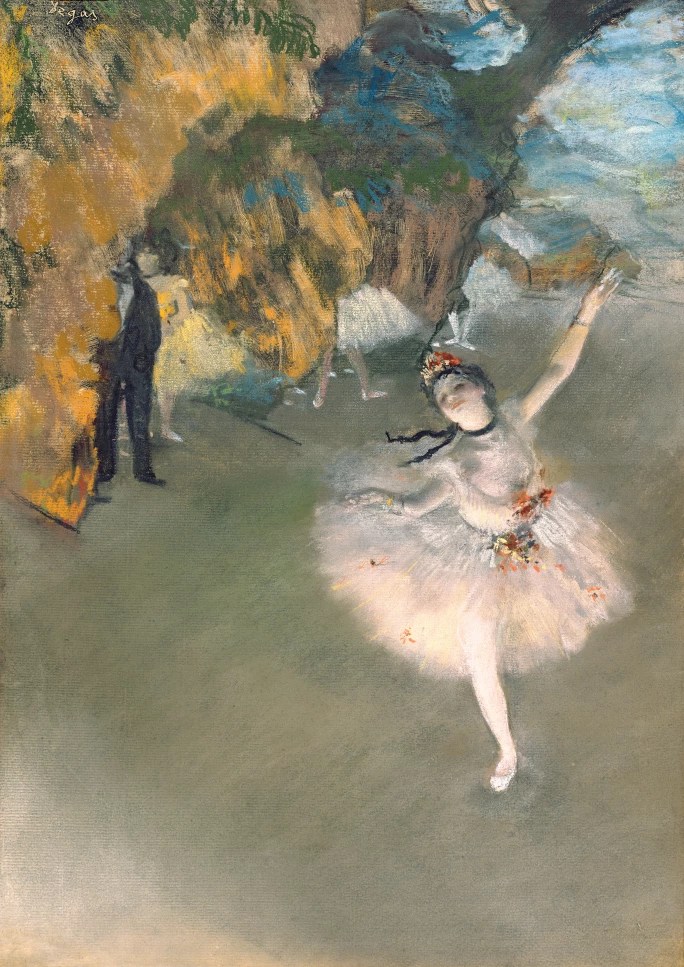
Degas’s themes and subject matter reminded me of Nabokov’s. Nabokov never wanted girls on his front cover, yet published ignored his wishes.

