Warning: Satirical Content
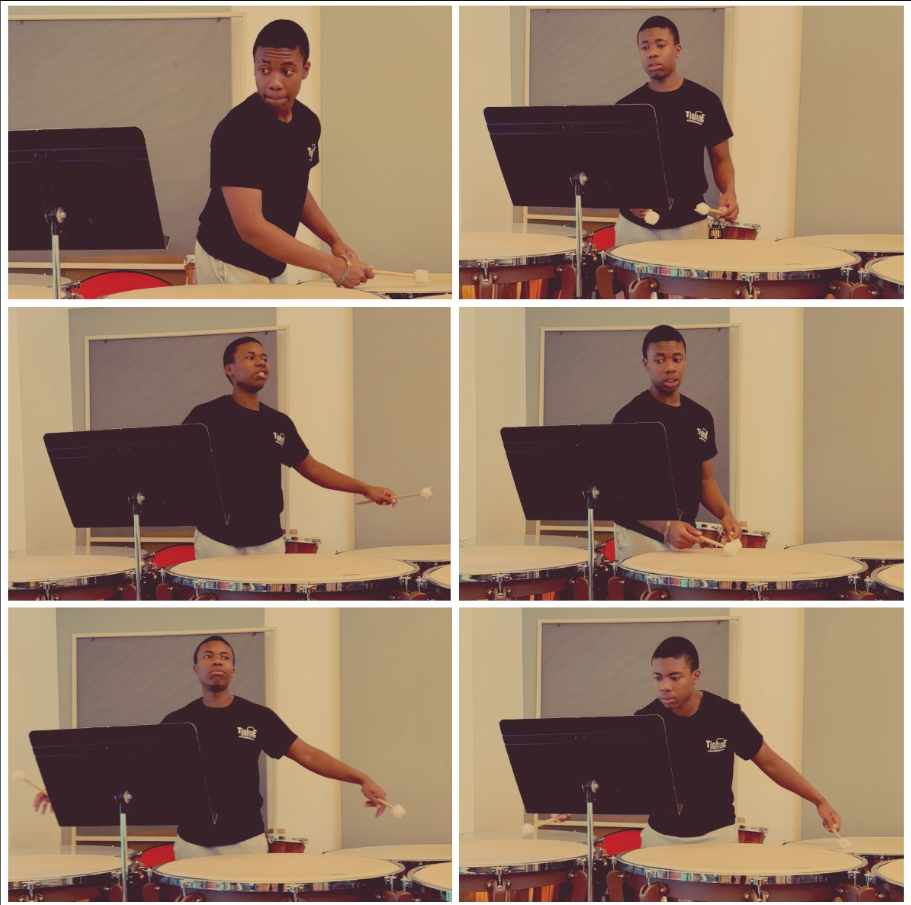
As a responsible young percussionist, I open the doors of Hess 213 (the band room) ten minutes before rehearsal begins. I first free the imprisoned auxiliary instruments. In traditional Deerfield fashion, hooligans destroy our mallets, our sticks, and our instruments, so we must resort to locking them away (for their own safety, of course). Going up the stairs, I remind another percussionist (for the sake of privacy, we’ll call him… Little Drummer Boy) to please stop forgetting his sheet music.
Suddenly, a viola player slams a door in my face! I obviously don’t know the names of any musicians outside my section, but such impudence from a fellow musician! I wonder why there is such tension between percussionists and string twackers and mouth breathers. Initially, the grapevine whispered that they despise our lack of effort and the ease of our music. Yes, our music is sparse, but at least we know what the tempo is. The same cannot be said for every section (*cough* brass *cough*).
A few scattered-brained violinists and clarinists run in and then rehearsal finally begins. In the crowd of musicians, I find few smiles.
Regardless of how the orchestra hierarchy falls, this rehearsal begins as all do. They tune and we watch. We often watch, which is perhaps what differentiates us from the rest of the orchestra. We have enough time to watch the orchestra’s beautiful post-Miles-Davis dissonance.
Rehearsing each piece, the section flawlessly plays in time, and Little Drummer Boy dances to the music when tacit. I laugh when ittle Drummer Boy drops his sticks and smile when the double forte shakes trumpets into the right pitch.
While waiting for my first and final cue in the A section, I finally figured out why the horse-hair hitters and reed smoocher. The joy of percussion disgusts them! Our joy is not mere chance, we worked hard to perfectly hit the cymbal once. When one chooses percussion, one chooses joy. When one chooses the viola, one chooses sensorineural hearing loss.
To the percussion section, percussion transcends an extracurricular activity on the Common App list. Being a percussionist is a lifestyle. When we leave, we pray that the next player who tunes the timpani finds the same felicity as us. If not, then we have failed, not as percussionists, but as people.
After Deerfield, a percussionist occasionally picks up the tambourine or plays a repeated rhythm out of habit. Whenever we watch a professional symphony play, our eyes will naturally fall to the back, to the only authentic section. We will reflect on the serenity of rehearsal Mondays, the jollity of concert Fridays and the countless hours of tacit that went into becoming the percussion section.