Ca ira mieux demain I shrugged after another unfortunate event. For the uncultured anglophones, the phrase roughly translates to “it will be better tomorrow”. I cannot help but chuckle at the fact that the French language produced such a chimeric phrase… cue Candide. By one Francoise-Marie Arouet, it’s the obvious French response to optimism.
Teenagers, myself included, cling to phrases like ca ira, to manufacture hope for tomorrow. We grasp for an idea that does not exist- the future.
Candide’s conceit hinges on the uncertainty of the future and the dangers of reliance on it. The young man around the world, through every fortune and misfortune imaginable.
While Candide is infamous for the misfortune he survives, but he still experiences fortuity. He reunited with his love, Cunegonde, and received a windfall from El Dorado.
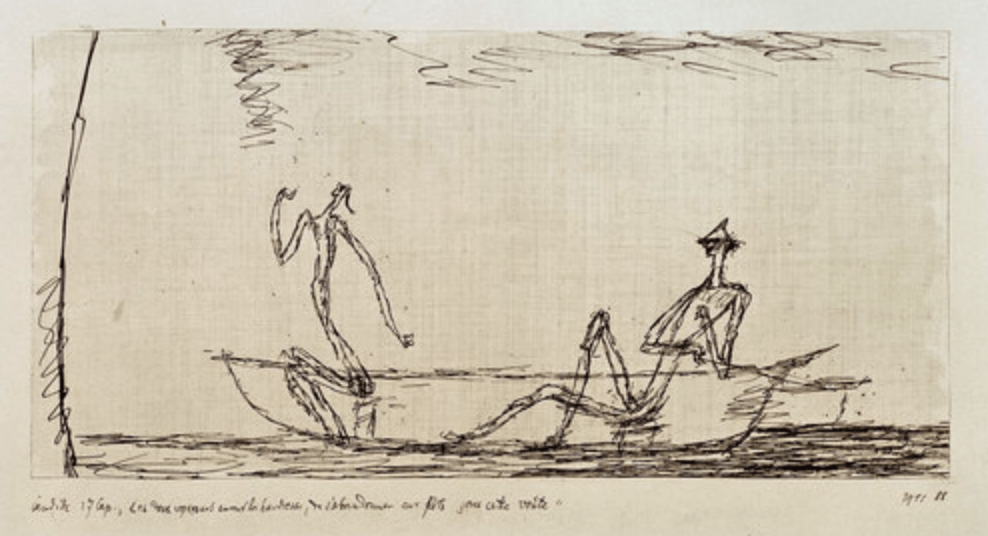
Each chapter presents a new situation to test the limits of Pangloss’s (Candide’s teacher) philosophy, optimism. By applying this philosophy, Candide loses it all. A once closed-off Westphalian prince quickly reduced to a farmer in Turkey with no life ahead of him. (Ecce! illum documentum Voltairis) Candide places his future in the hands of an uncertain tomorrow. Voltaire builds an immaculate case against procrastination that no high schooler would heed (I have incomplete Latin homework).
Nevertheless, the shortcoming of optimism stem from envisioning a future. A simple daydream in class can evoke a confession of love or new art project. Hope rests on the pretense that an action occurred. Optimism needs no action, hence, inertia! (Etymologically, “inertia” combines the Latin word for skill and the root for “not”. Funnily enough, if optimism leads to inertia, and inertia can translate to skillessness, then optimism could be the philosophy for skillnessless). Some even call it the greatest sin…
The answer is always right before our eyes. Candide exhibits what happens after enduring a continuous chain of tragedy. Still, two interpretations can be made of the denouement. The first, supporting Pangloss’s perspective, claims that Candide overcomes his naivete by experiencing all those misfortunes. The second interpretation suggests that Candide’s situation in and of itself is tragic. His ultimate days are filled with futile farming, philosophizing away from society.
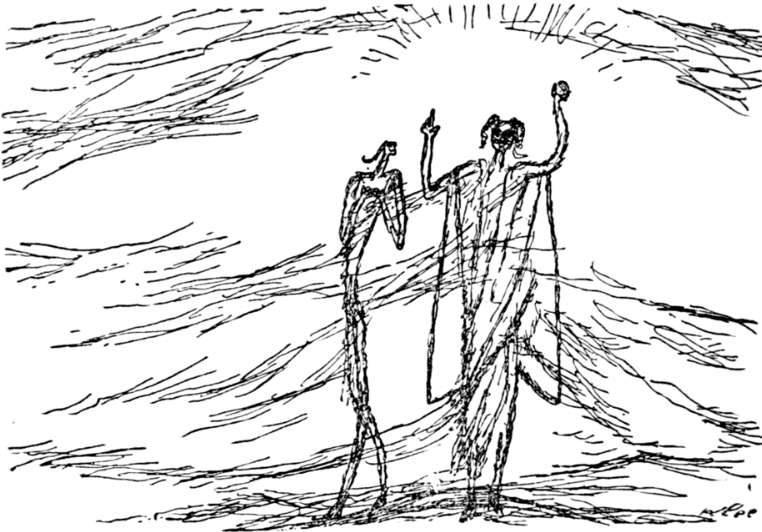
Essentiellement, the second interpretation suggests that optimism cultivates inertia. Candide “remained in a state of suspense” (111) after chapters of suffering. His suffering did not prevent his inertia.
Candide breaks inertia by meaningful reflection. He realizes that a Turkish farmer is more satisfied than any king in history.
As Candide works on his garden, surrounded by peers who do the same, a reader may scratch his head: Voltaire wants us all to be farmers!?
Voltaire’s la jardin allegory applies to communities of any scale. Voltaire’s perspective on cultivating one’s community is relatively classless; he does not care what the garden consists of.
As a contemporary reader, I must admit that society prioritizes the cultivation of certain gardens over others. Instead of the vague term “community”, la jardin may symbolize one’s life. Always is it worthwhile to cultivate one’s life.

